

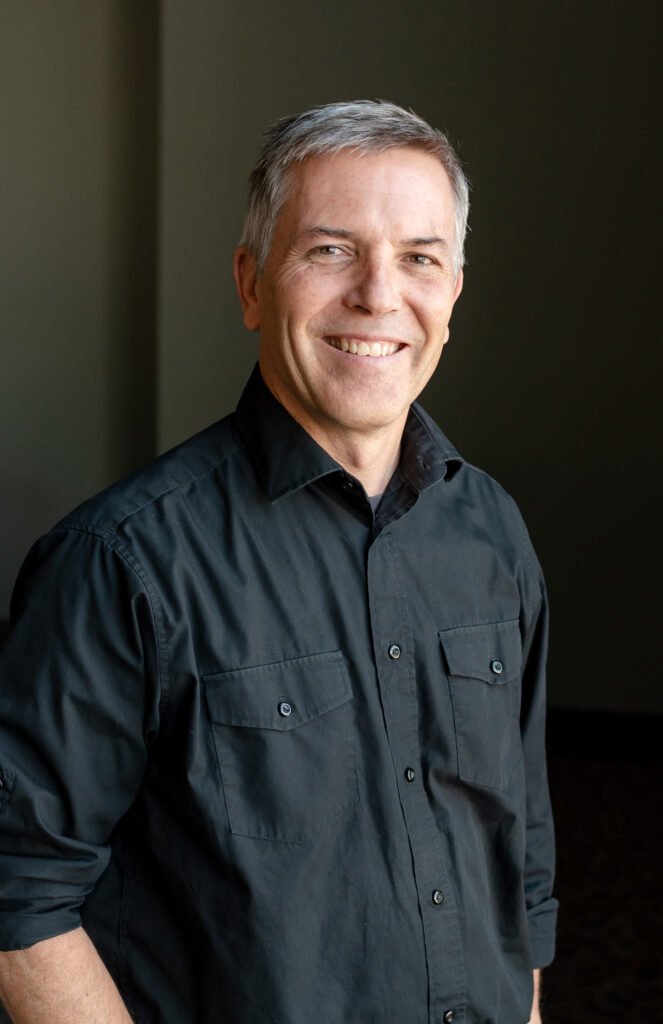
Rev. Kent Norr
GOC member and Pettisville Missionary Church lead pastor
Rev. Kent Norr (lead pastor, Pettisville Missionary Church, GOC member)
Hanging on my office wall are a variety of vintage farm signs. Seed corn signs. Farm feed signs. And farm equipment signs.
The reason behind this collection is due to growing up on my family’s dairy farm.
As a kid, I loved living and working on the farm. I was feeding baby calves at age 5. I was milking cows by age 9. At age 10, I was driving tractors and working fields with large tillage equipment. I learned a lot about farming, family and faith.
During my high school years, I was actively involved in 4-H & FFA. (Athletics was not my thing and I was too short to play basketball, which was the premier sport in the state of Indiana.)
When I graduated high school, I joined the family farming operation full time. I assumed it would be my lifetime career. But when I hit age 25, God revealed another plan for me. He called me into full-time Christian ministry. Like Elisha, I “burned my oxen and plow” and followed God’s call (1 Kings 19:21). My dad and I sold the dairy herd, and we stopped farming. I spent the next four years studying pastoral ministries at Taylor University, Fort Wayne.
For the past 27 years, God has given me the opportunity to serve as a pastor/shepherd in the Missionary Church. I’ve been amazed at the parallels between farming and ministry. There are more similarities than you might think.
Here are just a few…
#1 – THE RAIN FALLS ON THE JUST AND THE UNJUST (Matthew 5:45)
God doesn’t favor Christian farmers over secular farmers. Christian farmers can experience flooding (too much rain) and drought (not enough rain). In fact, there may be times when the secular farmer ends up with higher corn yields than the Christian farmer.
The same is true in ministry. There is no favoritism or special blessing from God for Christian ministry leaders. We must do the hard work of shepherding, preaching, praying, evangelism, disciple making, missions, church planting, etc. And the results may be different than we had expected or hoped.
#2 – THE 4 SOIL TYPES REPRESENT PEOPLE’S HEARTS (Matthew 13:1-8)
Not all soil is good for growing corn, soybeans and wheat. Some soil is so dry that it can only grow a cactus plant. Other soil is so saturated with water that it remains a swamp. Still other soil is so rich in nutrients that it produces a bountiful harvest.
The same is true in ministry. People respond differently to the gospel. Some people reject it. Others receive it and then get overwhelmed with the things of this world. Still others receive the gospel, grow in Christ, reach others, and produce a bountiful harvest for God’s kingdom.
#3 – PATIENCE IS NEEDED (James 5:7-8)
A farmer is patient. He is patient in waiting for the soil to dry after the spring rains. He is patient waiting for the seed to germinate and sprout through the ground. He is patient waiting for the summer rain. He is patient waiting for plants to grow, pollinate and mature. He is patient in waiting for the crop to dry down for harvest.
The same is true in ministry. Patience is needed for people to come to faith in Jesus Christ. Patience is needed in teaching and helping believers mature. Patience is needed to identify, train and equip leaders. Patience is needed to pray and to raise-up new workers for the harvest field. Success in ministry never happens overnight.
#4 – THERE WILL ALWAYS BE WEEDS (Matthew 13:24-30)
One of the farmer’s greatest frustrations is weeds. Regardless of the soil type, regardless of the weather, regardless of what kind of crop is planted, the farmer always battles weeds. Weeds will suck the nutrients and the water from the soil, leaving nothing or very little for the crop. If the farmer loses the battle to the weeds, he has nothing to harvest in the fall. (Even if there is a small harvest, he will get severely docked on the selling price at the local grain elevator because of the weeds.)
The same is true in ministry. There will always be “weeds.” Not physical weeds, but attempts from the Enemy to suck the life out of ministry. There will be slandering between believers. There will be idolatry among Christians. Church members will struggle with sinful addictions. Marriages will teeter on the brink of divorce. The worldly culture will assault biblical values. Teens will give greater allegiance to their sport team rather than to Jesus and His bride the Church. And the list goes on. Battling the weeds is always a part of ministry.
#5 – THERE IS PARTNERSHIP BETWEEN GOD AND THE FARMER (1 Corinthians 3:6-7)
Back in my farming days, I always sensed a close partnership with God. I cultivated the soil. I planted the seed. I fertilized the fields. I actively attacked the weeds. I harvested the crop in the fall. But nothing would have happened apart from God. God created the soil. God caused the seed to germinate. God provided the daily sun, and He provided the timely rain. God designed the plant to grow, mature, pollinate and produce a harvest.
The same is true in ministry. It’s important for us to do our part. We till up the hard-packed soil of people’s hearts. We plant the seeds of the gospel. We water the seeds with the truth of God’s Word. But there is a sense of partnership with God because God does the things we can’t do. He awakens the conscience of the spiritually dead. He brings conviction of sin. He offers undeserving grace and the forgiveness of sin. He brings transformation of the heart—where the old is gone and the new has come. He brings sanctification. He brings spiritual maturity. Without God, there is no harvest.
I know that many of you are actively involved in ministry. Can I encourage you today? God sees you. He knows you are doing the hard work of cultivating, planting and harvesting. At the same time, trust God to do His part. You can trust Him for the outcome because He promises in His Word that you can anticipate a good harvest—where the yield monitor reports it being 100, 60 or 30 times what was sown (Matthew 13:8). This is all for the glory of His name and the advancement of His kingdom.