

Throughout my ministerial life, and having worked most of the time with people in ministry or in preparation for ministerial life, one question that resonates most in my mind is: who will be the next pastors and leaders? One of the most sacred responsibilities of the church is to prepare those who will continue the work of the Kingdom of God. Each generation receives the gospel as a treasure, but also as a stewardship. We must not only preserve it, but also transmit it with faithfulness and passion.
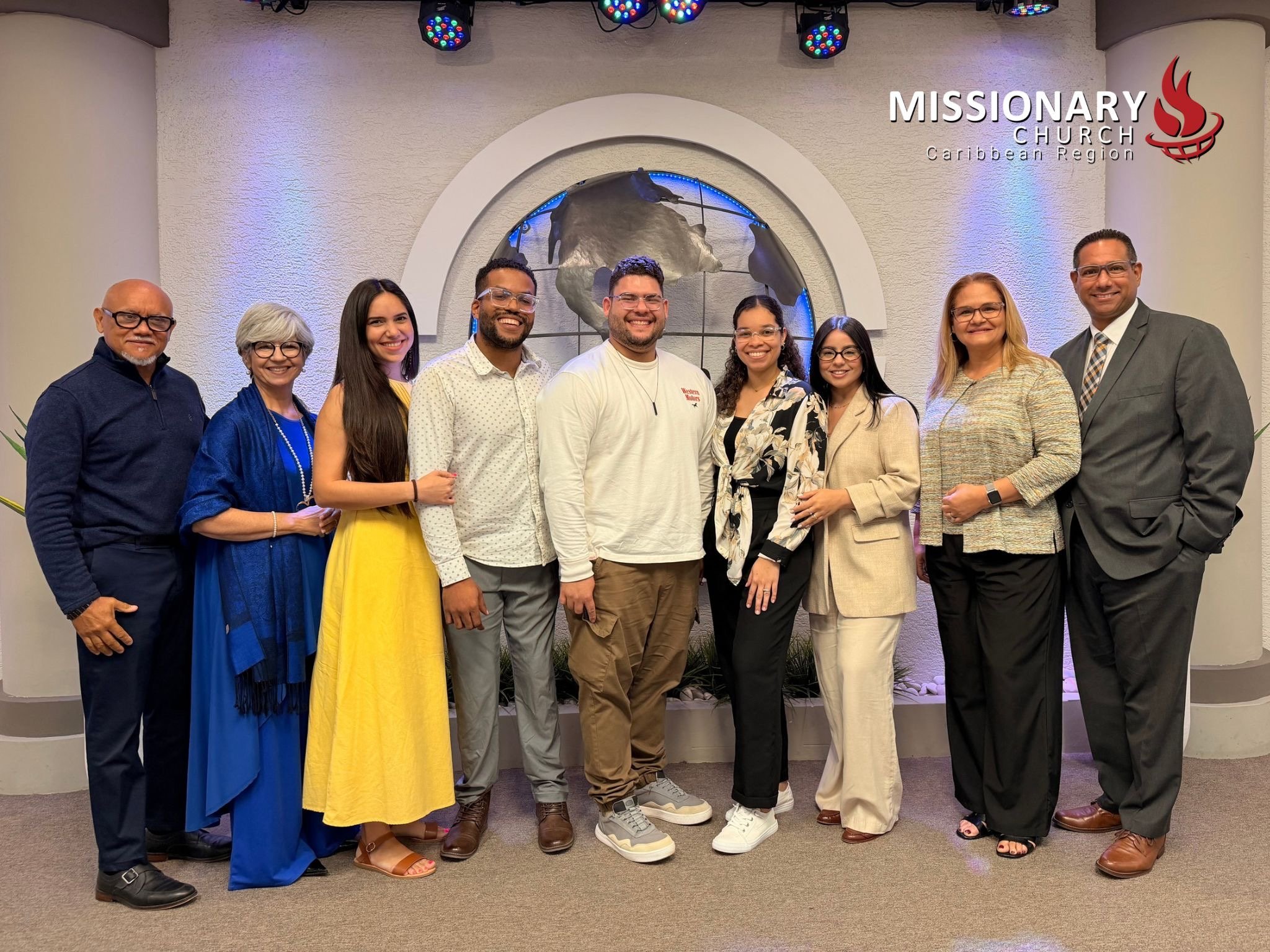
Five new leaders have entered pastoral training, pictured here with Pastors Pablo Reyes and Sandra I. Oyola (left) and Jennette Soto and Victor Lopez Acosta (right).
Scripture makes it clear that spiritual leaders were never designed to walk alone. God has always worked through relationships of mentorship, accompaniment, and intentional delegation. Modeling and discipling the next generation of pastors is crucial. We must successfully pass the torch of the calling to those who come behind us.
At the heart of pastoral ministry beats a divine mandate that transcends the present: not only to shepherd the flock that God has entrusted to us today, but to intentionally and urgently prepare those who will carry the torch of the Gospel tomorrow. Modeling and discipling the next generation of pastors is not a sentimental option or an optional project; it is an essential biblical obedience for the continuity of the Kingdom, generational faithfulness, and the glory of God.
Just as Moses did with Joshua, Elijah with Elisha, and the apostle Paul with Timothy and Titus, today’s pastors are called to live discipleship as an act of sacred stewardship. When we understand this, we also realize that there is a “perfect time” to pass the torch—a divine kairos that we cannot hasten or delay without eternal consequences.
Why is it vital to model and disciple? How does the Bible mandate generational multiplication?
Scripture reveals that God has always thought in terms of generations. Psalm 145:4 declares with prophetic clarity: “One generation shall commend your works to another and shall declare your mighty acts” (Psalm 145:4, ESV).
This is not a poetic suggestion; it is God’s design so that faith does not die out. When a pastor only looks at his own ministry, he lives in spiritual myopia. Intentional discipleship is God’s strategy so that the work does not depend on one man, but multiplies in faithful men. The apostle Paul expresses it with military and agricultural precision in his final letter to Timothy: “And the things you have heard me say in the presence of many witnesses entrust to reliable people who will also be qualified to teach others” (2 Timothy 2:2, NIV).
Here we see four generations in a single sentence: Paul to Timothy, to faithful men, and to others. This is the chain that prevents the Gospel from being lost. Paul did not merely teach doctrine; he modeled character, suffering, faithfulness, and passion for Christ. Timothy was not a secondary project; he was his “beloved son in the faith” (1 Timothy 1:2). The same happened with Titus, whom Paul left in Crete to “put in order what was left unfinished” (Titus 1:5). Discipleship is not a leadership program; it is spiritual accompaniment.
Moses understood this in the wilderness. When God revealed to him that he would not enter the Promised Land, he did not cling to leadership with jealousy. He prayed for a successor, and God pointed to Joshua, “a man in whom is the Spirit.” The commissioning scene is powerful:
“So the Lord said to Moses: ‘Take Joshua son of Nun, a man in whom is the spirit of leadership, and lay your hand on him … Give him some of your authority so the whole Israelite community will obey him’” (Numbers 27:18, 20, NIV).
Moses did not merely transfer authority; he transferred anointing and dignity. The result is seen in Deuteronomy 34:9: “Now Joshua son of Nun was filled with the spirit of wisdom because Moses had laid his hands on him. So the Israelites listened to him…” Joshua did not emerge from nowhere; he was shaped over forty years at Moses’ side, watching how he spoke with God face to face, how he interceded for a rebellious people, and how he obeyed even when it cost him entry into Canaan.
Elijah and Elisha show us discipleship as radical following. Elisha left plow, oxen, and family (1 Kings 19:19-21) to serve Elijah. When the time of departure came, Elisha did not ask for ministry, position, or material inheritance; he asked for “a double portion of your spirit” (2 Kings 2:9). He saw his mentor taken up in a chariot of fire and picked up the fallen mantle. He struck the waters of the Jordan with the same mantle and cried out: “Where now is the Lord, the God of Elijah?” The waters parted. The successor did not merely imitate; he received multiplied anointing because he had been close, observing, serving, and longing for more of God.
These examples are not historical anecdotes. They are divine patterns. When today’s pastors do not model or disciple, we create voids that the enemy fills with carnality, cheap doctrine, or secular leadership. The church does not die from external persecution; many times it dies from a lack of internal succession.
How can we identify the “perfect time” to pass the torch?
As pastors and mentors, we should not pass the torch because of pressure, nostalgia, or chronological retirement. It must be a kairos, God’s opportune moment.
How do we discern it?
When the Spirit confirms the calling and maturity of the disciple
God Himself told Moses: “Take Joshua… a man in whom is the spirit.” It was not a popularity poll. It was divine revelation. As pastors and mentors, we must pray and observe. Does the young pastor show the fruit of the Spirit (Galatians 5:22-23)? Does he handle the Word rightly (2 Timothy 2:15)? Does he have proven character in small things (Luke 16:10)? Paul waited until Timothy proved his faithfulness on missionary journeys before writing him the pastoral epistles.When the disciple is already exercising ministry with his own authority
Elisha did not ask for the mantle; he was already serving. Timothy was already preaching and correcting churches. When the young pastor begins to “set an example for the believers in speech, in conduct, in love, in faith and in purity” (1 Timothy 4:12), even if he is young, it is a sign that God is raising him up. We should not wait for perfection; we should wait for faithfulness.When the pastor or mentor senses in his spirit that his season is concluding
He must make it known. Paul expressed it with sober clarity: “For I am already being poured out like a drink offering, and the time for my departure is near. I have fought the good fight, I have finished the race, I have kept the faith” (2 Timothy 4:6-7). It was not depression; it was discernment. The mature pastor perceives when God calls him to another level (intercessory prayer, writing, broader-scale mentoring) or when his health, energy, or anointing indicates it is time to release. Zeal for the Kingdom must overcome attachment to the pulpit.When there is community confirmation and visible multiplication in that rising leader’s ministry
The congregation obeyed Joshua because they saw the anointing. The company of the prophets recognized that “the spirit of Elijah rests on Elisha” (2 Kings 2:15). The local church, the elders, and other mentors must confirm: “This is the man.”When the mentor is willing to release with joy, not bitterness
Recognizing that his time has come, the mentor must do what is right—pass the torch. Moses was not resentful when his ministry came to an end; he blessed Joshua. Elijah did not grasp the mantle; he let it fall. Paul did not manipulate Timothy from prison; he freed him to fly. The pastor who clings to control reveals that his identity is in the title, not in Christ.
Let us be faithful in passing on what we have received from the Lord. Pastors, the calling we received is not ours, it is Christ’s. We received it from those who went before us, and we must deliver it multiplied. Modeling Christ with transparency, discipling with patience, and passing the torch at God’s perfect time is one of the most powerful legacies we can leave.
May the Holy Spirit give us wisdom to identify our Joshuas, Elishas, Timothys, and Tituses. May He deliver us from the spirit of Saul who rejected David out of jealousy. And when the day comes to release the mantle, may we be able to say like Paul: “I have finished the race… and not only to me, but also to all who have longed for his appearing.”
The torch is burning. Who are you passing it to?
By: Victor Lopez Acosta
Director of the Caribbean Region